Murphy, TX
Solar for Your Home in Murphy, Built From Parts You Understand
We design and install rooftop solar panels, battery storage and the wiring that ties them together, then keep systems producing with repair and panel cleaning. Before anything is ordered, we show you the panels, inverters and racking we would use on your home in Murphy, Wylie or Sachse, and why.
- Over 40 solar certificates and licenses
- Line-item written quotes
- Each component shown and compared
- Careful, tidy installs
Panels, Batteries and Upkeep
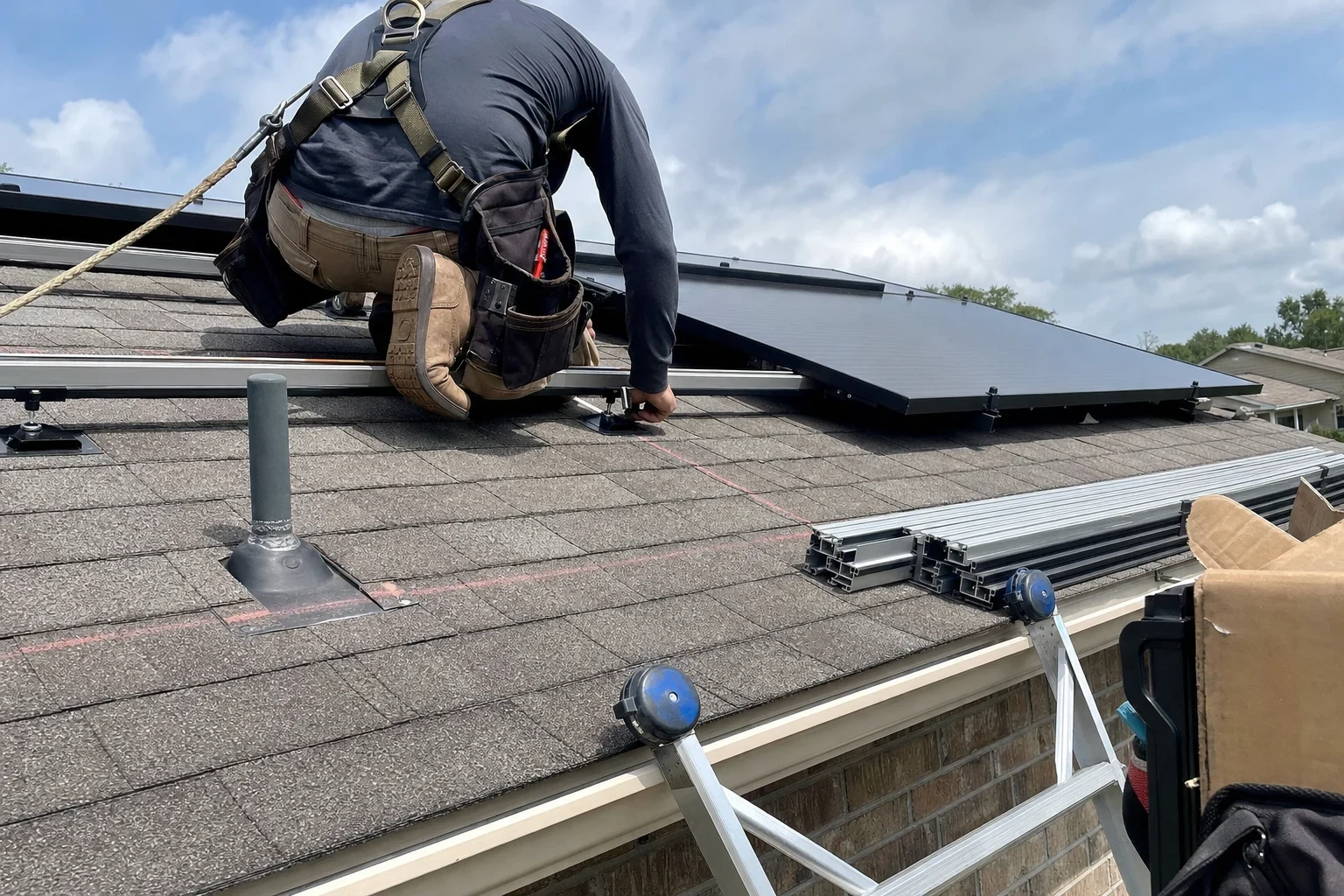
Solar panel installation and roof-mounted solar make up the bulk of what we do, with each array sized to what your home actually consumes. Battery storage can go in with a new system or be added to one you already own. When output falls or an inverter shows a fault, solar repair tracks down the cause, and panel cleaning removes the dust and pollen that settle on the glass between rains. Every service page covers the materials involved and how they tend to fail.
Solar Panel Installation
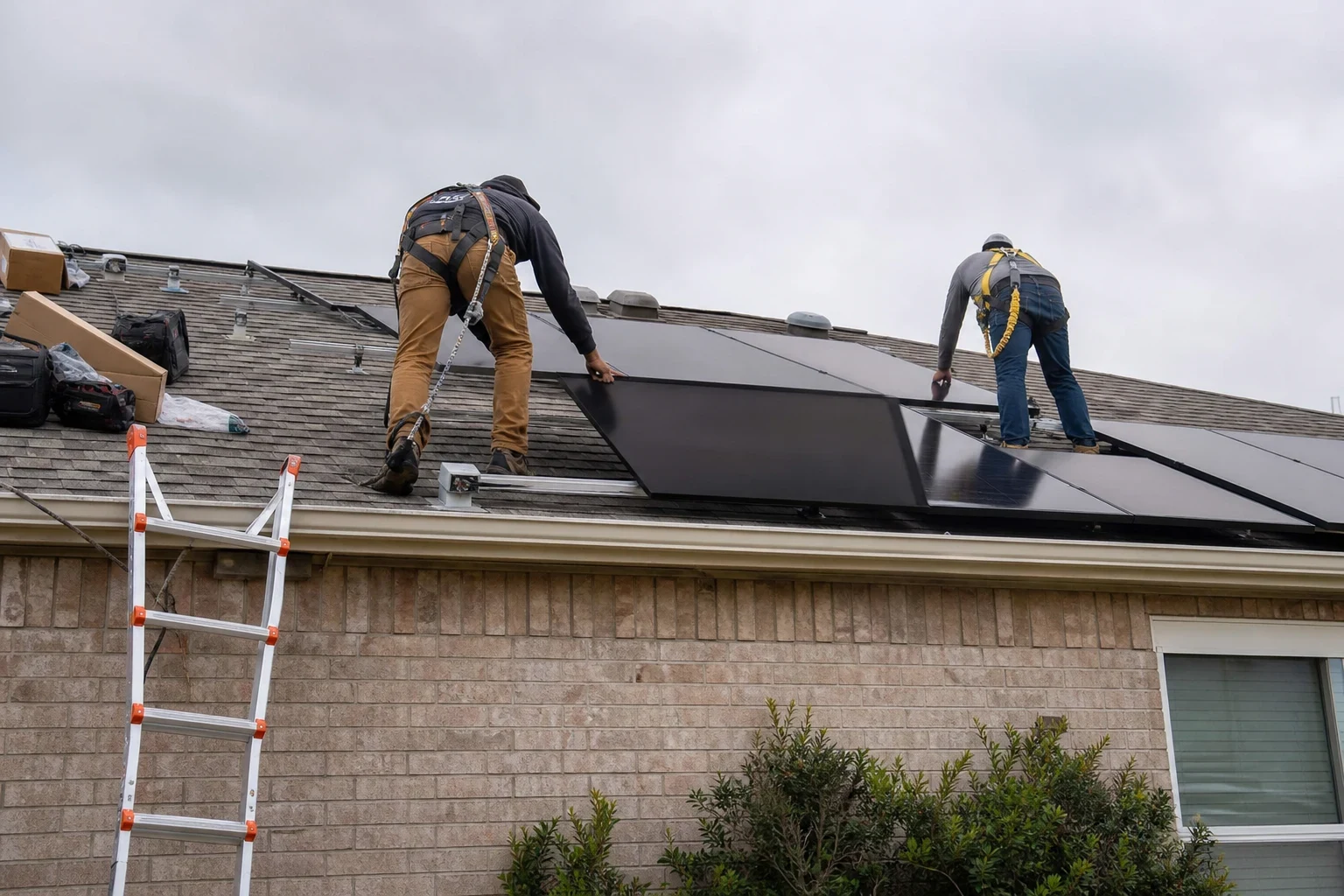
Panels, racking and inverters chosen for your roof and your electric use, with each material trade-off explained before the install.
Battery Storage
Home batteries sized to your real loads, with a clear explanation of chemistry, coupling and where the unit should live on your property.
Solar Repair
Diagnosis and repair for underperforming solar systems, from inverter faults and loose connectors to cracked panels and worn mounting seals.
Panel Cleaning
Careful cleaning of your solar array with purified water and soft brushes, so dust, pollen and droppings come off without scratching the glass coating.
Roof-Mounted Solar
Panels, racking and mounts chosen for your roof's material and pitch, with flashed attachments and conduit runs planned to look as clean as they perform.
How an Installation Runs
Most of the time on a solar project goes into design and approvals. The work on your roof is usually the shortest part.
- 1
We start on the phone
Tell us how your household uses electricity, about what your bills come to and what you hope the system will do. We sketch out the likely equipment and set a time to come see the house.
- 2
Visit and layout
We take roof measurements, mark shade from trees and nearby buildings, and look inside your electrical panel. Then we lay out the array and pair panels and inverters with it, walking you through two or three equipment options and what each trades off.
- 3
Paperwork and sign-offs
We apply for the city permit and file the utility's interconnection paperwork. If an HOA is involved, we help put together what its review requires.
- 4
Install day
The crew covers plants and driveways, attaches the racking, places the panels and runs conduit to the inverter and disconnect. Most houses take one to two days, and we clear away nails, boxes and wire scraps before we go.
- 5
Final inspection and power-up
After the city inspector approves the work and the utility grants permission to operate, we turn the array on. We set up the monitoring app with you and explain how normal output climbs and falls over the seasons.
What Drives the Cost of a Home Solar System
Every house gets its own number, since roofs and power bills vary from one home to the next. Below are the things that change the price the most, and each shows up as a separate line on your written quote so nothing is hidden.
Your quote comes after we see your roof, your electrical panel and the last twelve months of bills. It arrives in writing, split out by part, before anything goes on the calendar.
- How big the array is
- Panel count comes from how much electricity you use in a year and how much of that you want covered. Bigger systems cost more at the start, though the price per watt tends to come down.
- Which panels and inverters
- More efficient panels squeeze extra output onto a tight roof. Putting electronics on each panel costs more than a single inverter on the wall, but it stops one shaded panel from dragging down the rest and lets you track every module separately.
- Roof shape and reach
- Lots of small roof sections, steep slopes or second-story edges call for extra racking, labor and safety gear. One wide face pointed south or west is the easiest job.
- State of your electrical panel
- Some older service panels need replacing or a supply-side tap before solar can connect safely. We open yours on the first visit, so any added cost is on the quote instead of coming up partway through.
- Adding a battery
- A battery raises the total in a noticeable way, and its size and chemistry both play a part. We match it to the circuits you really want kept on.
- Permits and utility filings
- Every project includes the city permit, the inspection and the utility's interconnection application, and each is shown as its own line instead of folded into something else.
Where We Install
We are based in Murphy and install and service solar throughout the surrounding area, including Wylie, Sachse, Parker, Plano and Garland. We also work regularly in Richardson, Allen, Rowlett, Fairview and Lucas.
- Murphy
- Wylie
- Sachse
- Parker
- Plano
- Garland
- Richardson
- Allen
- Rowlett
- Fairview
- Lucas
Homes a little beyond these towns are often within reach, so mention your location on the phone. Our Service Areas page has more detail.
About Murphy Solar Installation
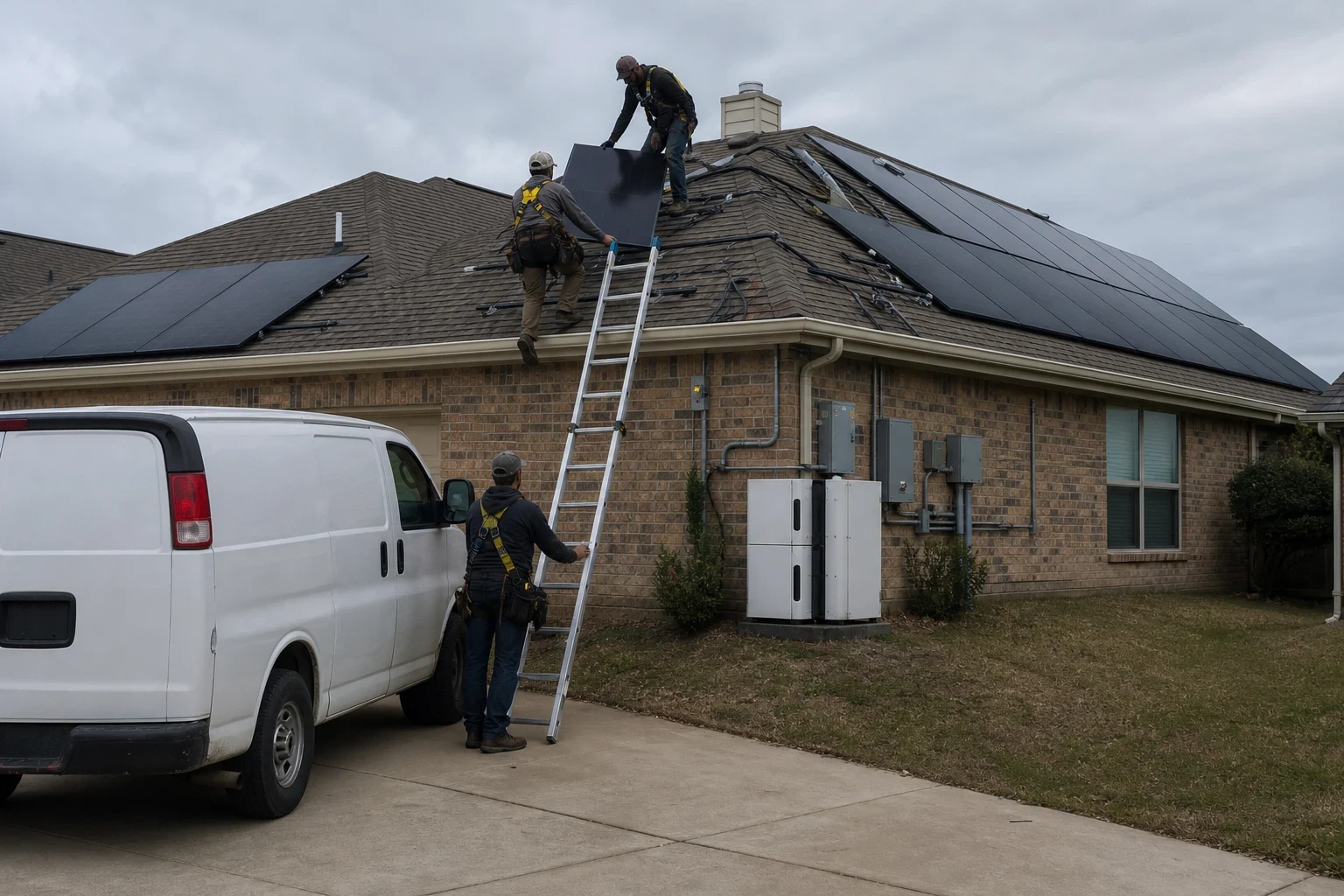
We started this company to install solar the way we would want it on our own houses: with parts we can explain, hardware we would trust on a hot roof in August, and wiring a future electrician can follow without guessing.
Our work stays close to home in Collin County and the neighboring towns. That keeps us near the systems we install, which matters when a homeowner calls about a monitoring alert or a panel that needs a look. You can read more about how we work on our About page.
- Certifications
- Over 40 solar certificates and licenses
Questions Homeowners Ask
Something not covered here? (972) 458-5564
What will solar cost for my house?
That comes down to your power use, your roof's layout and the panels and inverters you pick. We will not price it from a guess. Once we have visited and seen your bills, you get a written quote split out by part so you can weigh each option line by line.
What panels would you suggest?
Around here we usually favor monocrystalline panels with a low temperature coefficient, because summer heat drags down output on lesser modules. All-black panels run a bit more and look neater on the roof. You see two or three options with their efficiency, the manufacturer's terms and price, and you make the call.
Is a battery necessary?
Not in every case. A battery makes sense if you want the fridge and a few important circuits on during an outage, or if your electricity plan pays very little for power you send back. If neither applies, going without storage may suit you better, and a battery can come later if we wire for it now.
Could panels damage my roof or make it leak?
Every mount is fastened into a rafter and sealed with flashing tucked beneath the shingle above, so water runs off the way the roof intends. We look at the roof's condition first, and if it is close to needing replacement, you hear that before we install, not after.
What does hail do to panels?
Today's panels have impact-rated tempered glass, and we weigh those ratings when picking equipment. Extremely large hail can still break a panel, so we recommend telling your homeowner's insurer about the system. If a storm damages panels, our solar repair service can check and replace them.
How often do panels need cleaning?
Rain washes away a lot of dust, but spring pollen and dry summer weeks can leave a film that cuts output. Once or twice a year works for many homes. Our panel cleaning uses soft brushes and purified water, not pressure washers or harsh soaps that can wear the glass coating.
Is my HOA allowed to block solar?
Texas law generally keeps HOAs from banning solar outright, but many can still review where panels go and how they look. We help assemble the layout and equipment details their approval usually requires.
How long does it take from start to finish?
The install usually takes one to two days. Design, permitting, inspection and utility approval add several weeks on either side, and we keep you posted as each step moves.
Why Homeowners Choose Us
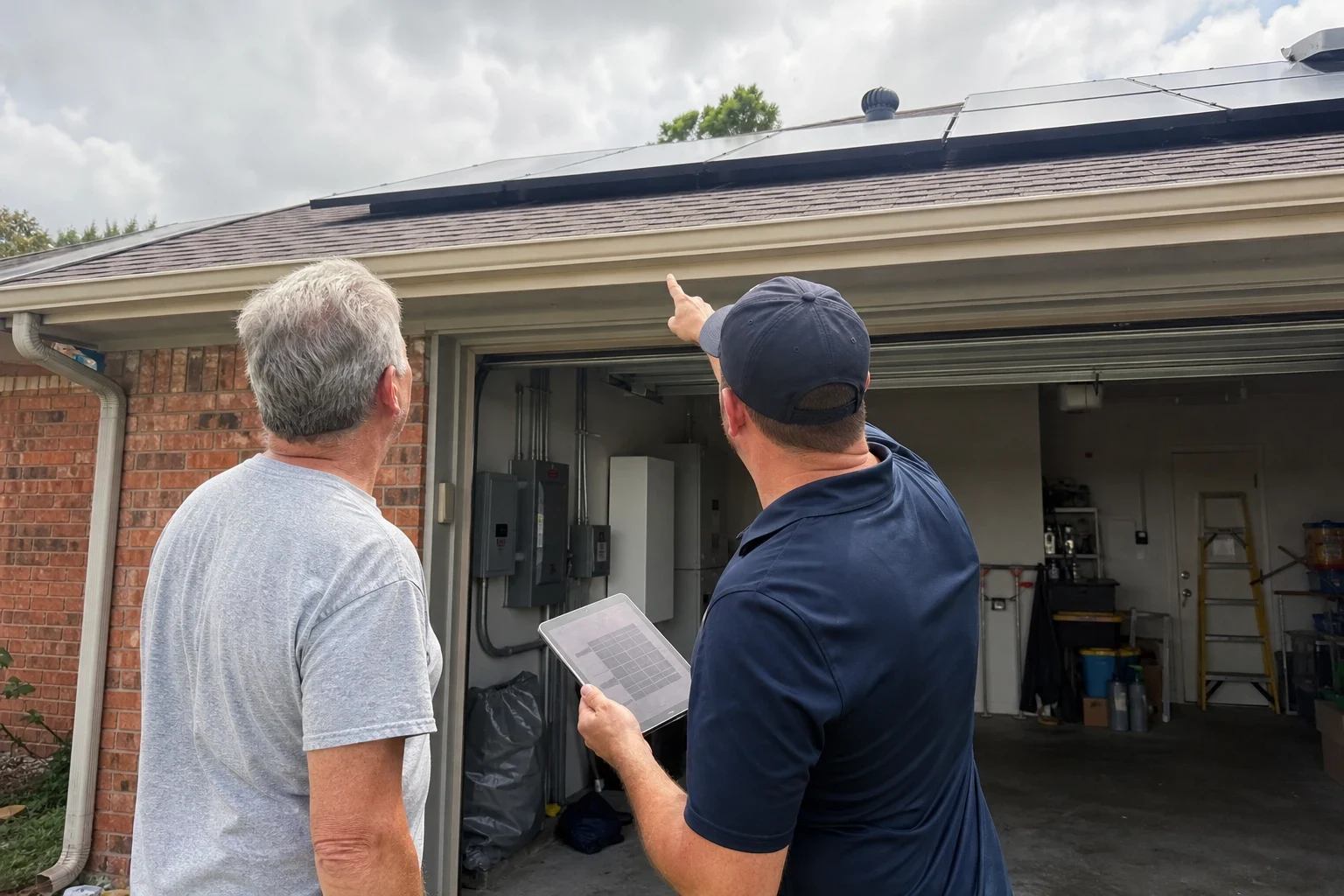
A solar system is a set of parts that has to work together on your roof for decades. We think you should know what those parts are before you sign anything.
- Materials laid out side by side
- We walk you through the real choices: monocrystalline panel options, string inverters versus microinverters, and lithium iron phosphate batteries versus other chemistries. You hear what each costs you in money, efficiency and long-term upkeep, so the decision is yours and not a sales script.
- Over 40 solar certificates and licenses
- Between us, our team holds over 40 solar certificates and licenses. That training shows up in small things, like correct conductor sizing, labeled disconnects and flashing sealed to the manufacturer's instructions.
- Parts chosen for heat and hail
- Panels lose some output as they get hot, so we compare temperature coefficients, not just wattage. We also look at glass and frame ratings, because a well-chosen module holds up better through a hard storm season.
- A finish you will not mind looking at
- We route conduit neatly, use black frames and rails where you prefer a quieter look, and keep the array tight to the roof plane. Penetrations are flashed, not just caulked.
- Straight talk about the roof underneath
- If the shingles under a planned array have only a few years left, you will hear that from us before any panel goes up, along with photos of what we saw. Roofing is not work we take on, so there is nothing for us to upsell.
Weigh Your Solar Options With Us
Share a little about the house and a year of power use, and we will lay out which panels, inverters and batteries suit it. The quote arrives in writing, itemized by component.